
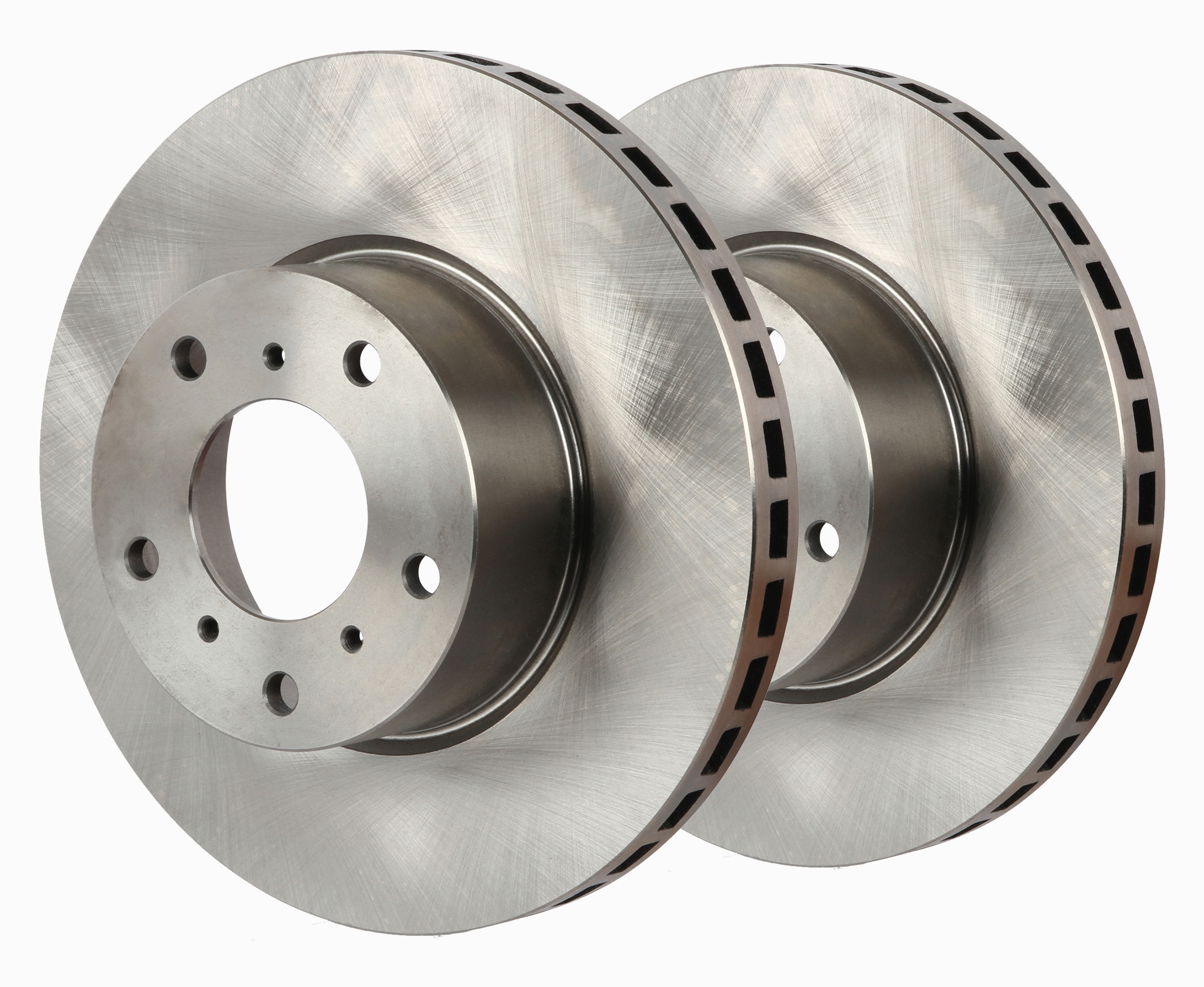
Disc Rotor Minimum Thickness:
Rotor Minimum Thickness is determined by the motor Vehicle Manufacturer during the initial vehicle design.
Continued operation at or below Minimum Thickness can lead to Brake system failure. As the rotor reaches its minimum thickness, braking distance increases, sometimes up to 4 meters! Disc Brake Rotor Minimum Thickness (also known as Scrap Thickness) is the minimum safe working thickness of a rotor at which it must be replaced.
A brake system is designed to take kinetic energy and transfer it into heat energy. This heat energy is created by the driver when the brakes are applied. Driver foot force is boosted then converted into hydraulic pressure which forces the piston to move inside the caliper. The piston movement forces the brake pads in contact with the spinning rotor. Rubbing between the brake pads and the brake rotor generates heat which is then dissipated by convection (ie hot air rising from the surface of the disc rotor) into the atmosphere.
As a rotor reduces in thickness its ability to absorb and dissipate heat generated during braking is reduced. Once Rotor Minimum Thickness has been reached its ability to absorb and dissipate heat is reduced to such an extent that a significant reduction in braking capacity can result. This can be evident in premature fade, increased stopping distances and abnormal brake noises. Naturally Mansfield Motors can accurately measure your cars disc rotors and advise you on the best course of action to take.
Disc Thickness Variation (DTV)
Is a condition where the disc rotor varies in thickness. After thousands of braking applications disc rotors wear and usually unevenly. As the disc rotates through the brake caliper, variation in disc thickness results in a variation in braking pressure applied by the disc pads to the rotor. This variation in braking effort is translated to vibration and shudder that can be felt throughout the vehicle and abnormal brake noises during brake application. DTV occurs due to uneven wear of the rotor during normal brake operation, and can be easily remedied by the machining of the disc rotors if they are still above minimum safe thickness.
Disc Rotor Machining:
If your disc rotors are still above minimum safe reusable thickness, there working surface can be machined back to as new condition. When new brake pads are fitted, machining of disc rotors is essential to ensure maximum braking efficiency. Mansfield Motors accurately and efficiently machine your worn disc rotors back to as new condition, using their own in house on car brake lathe. Of course if your rotors are below minimum safe thickness Mansfield Motors can supply OEM standard replacement disc rotors as required. That's why you can trust Mansfield Motors to perform the complete brake repair and remember you only get what you pay for. Trying to save a few dollars on brakes could cost your life.